Wellness
The Beginner's Guide to Starting a Meditation Practice in Coventry
You don't need a cushion, a retreat, or years of experience — just five minutes and a willingness to sit still.
4 min read
Wellness
You don't need a cushion, a retreat, or years of experience — just five minutes and a willingness to sit still.
4 min read
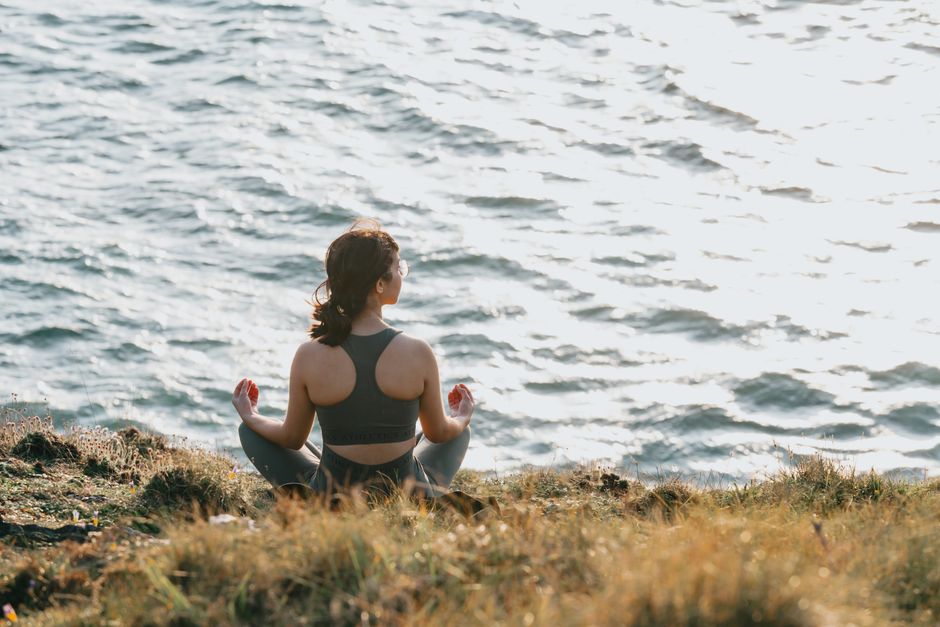
Demand for beginner meditation classes in Coventry has risen sharply over the past 18 months, with local venues reporting waiting lists that didn't exist before 2024. The city's wellness community, long anchored around the Canal Basin and the Fargo Village creative quarter on Far Gosford Street, is seeing a new wave of residents — many of them under 35 — turning up for their first session with no prior experience and a lot of questions.
It's not hard to understand why. Hormone health, sleep quality, and burnout are dominating lifestyle conversations right now, and mindfulness sits at the intersection of all three. GP surgeries across the CV1 and CV2 postcodes have noted increased patient interest in non-pharmacological tools for managing anxiety and stress. Meditation is consistently recommended by the NHS as a complementary approach — not a replacement for clinical care, but a meaningful addition to it. Anyone dealing with a specific health concern should speak to their GP or a qualified practitioner before making it a central part of their routine.
The good news for beginners is that Coventry has genuine infrastructure. The Coventry Mindfulness Project, which operates out of the Elm Bank professional development centre on Wheelwright Lane in Holbrooks, runs a structured eight-week Mindfulness-Based Stress Reduction course — the same MBSR format developed at the University of Massachusetts in 1979 that now has decades of clinical research behind it. Their next cohort begins on 14 September 2026, with places priced at £195 for the full programme, though a means-tested bursary covers roughly 30 percent of places each cycle.
For something less committed, the Coventry Buddhist Centre on Hartlepool Road in Earlsdon offers drop-in meditation evenings every Tuesday at 7pm. The sessions run for 90 minutes and are genuinely open to beginners — no particular belief system required. The suggested donation is £5, though no one is turned away for inability to pay. Fargo Village itself hosts periodic pop-up wellbeing mornings through its resident collective, typically running guided breathwork and body-scan sessions on the second Saturday of each month.
Apps are fine as a supplement — Headspace and Calm both report over 100 million downloads globally — but local instructors consistently say that beginners who start in a group setting are significantly more likely to maintain a practice after 60 days than those who go it alone with an app. The social accountability matters. So does having someone correct your posture and explain why your mind wandering during a session is not, in fact, a failure.
Starting a practice doesn't require ceremony. Pick a fixed time — morning works better for most people because the day hasn't crowded in yet — and keep the initial sessions to five minutes. Sit in a chair if the floor is uncomfortable. Close your eyes or soften your gaze downward. Focus on the physical sensation of breathing: the slight coolness of air entering the nostrils, the rise of the chest, the pause before the exhale. When your mind drifts to your mortgage, your inbox, or what you said at a meeting three years ago, you simply notice that it's drifted and return. That return is the practice. Not the emptiness — the return.
A 2023 meta-analysis published in JAMA Internal Medicine, covering 47 randomised trials and more than 3,500 participants, found that mindfulness meditation produced moderate improvements in anxiety, depression and pain compared with control conditions. The effects were most pronounced in people who practised consistently for at least four weeks. Four weeks is nothing. It's roughly the time between now and early August.
The practical advice is this: don't buy anything to start. Don't download six apps. Don't read the entire canon of Jon Kabat-Zinn before your first session. Show up to a Tuesday evening at the Buddhist Centre on Hartlepool Road, or register your interest with the Coventry Mindfulness Project for the September cohort. Sit. Breathe. Return. Do it again the next day. The complexity can come later, once you've established the habit of showing up for yourself for five uninterrupted minutes — which, for most people in 2026, turns out to be harder than it sounds.
Wellness
Wellness

Wellness

Wellness
About this article
Published by The Daily Coventry
Spread the word
Daily brief
Free, in your inbox before 7am. Weekdays.
The Daily Network — local news across Australia